
Sir Alfred Bird (1849-1922) and Sir Robert Bird (1876-1960)
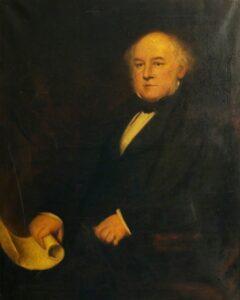
Sir Alfred Bird (1849-1922)
Sir Alfred Frederick Bird was the son of Alfred Bird, the creator of baking powder and custard powder, and greatly expanded the iconic Bird’s food company’s product range and profile. He was succeeded as chairman of Bird’s by his eldest son, Robert Bland Bird. Both were also successive Conservative MPs for the same Wolverhampton seat.
Alfred Frederick first tried to enter Parliament at the 1906 general election, as Conservative candidate for Wednesbury. Unfortunately, despite the seat being Tory-held since 1892 and a campaign visit from Joseph Chamberlain, Bird lost in the Liberal landslide. He was then adopted for Wolverhampton West, which he won in the January 1910 general election, defeating the incumbent Labour member. In the second 1910 general election, Bird hung on by 300 votes. He had an easier time in the ‘Coupon Election’ of December 1918, with a comfortable majority over Labour in the Coalition landslide.
Bird was not a very active participant in Commons business, nor a great orator in the Chamber. Generally he concentrated on constituency and industrial matters. Three months before the outbreak of war, he initiated a debate on wartime food supplies, calling on the Government to stockpile food to “avoid the danger of starvation and enforced capitulation should war unfortunately occur.”
Bird never held ministerial office; the highest he rose was when he was appointed in October 1917 as PPS to a junior Colonial Office minister.
Not surprisingly, the Birds were often best recognised for their food manufacturing interests. For example, when the Liberal MP for York, Arnold Rowntree (another famous food family), was en route to Canada in August 1912, he noted in letters to his wife that he had met several MPs on board, including “Bird (custard)”, and that “custard powder Bird is very amusing.”
In February 1922 Bird was knocked down and killed by a car in Piccadilly, an ironic end for a man who was an enthusiast in early days of motoring, and a founder of the RAC.
Alfred’s son, Robert was quickly nominated to stand as a Coalition Conservative in the ensuing by-election. All parties knew that it would be an important contest, as the fragile Coalition had suffered a run of by-election reverses. Robert loyally supported the ailing Coalition against his Labour opponent, and won with a decent majority only slightly reduced from this father’s 1918 success.
He held on to the seat with one brief interlude until he stood down at the July 1945 general election. In virtually all these elections, his main opponent was the colourful trade union leader and Independent Labour politician, W J Brown. Brown toppled Bird in 1929, in a campaign where he attacked the Bird’s company for paying minimum wages to its mainly female staff, and he had some of its custard powder analysed, revealing it to be, so he claimed, largely composed of cornflour.
Brown soon resigned the Labour whip and flirted with Oswald Mosley’s New Party. After Ramsay MacDonald’s minority Labour Government was replaced by a Tory-dominated National Government in 1931, Bird easily recaptured the seat from him, and beat him again in 1935.
After 1945, Robert remained influential in Midlands Conservative politics. As President of the Wolverhampton South West Constituency Association (the successor to his old West constituency), he became embroiled in an extraordinary dispute between its officers and its new MP, Enoch Powell.
Powell had won the seat in 1950, but, having fallen out with local activists over his high-handed treatment of them during the campaign, he threatened to stand down at the next election. Bird, from an earlier generation than the ambitious Powell, did not get on with him, and matters festered for months before eventually a compromise was reached.
Knighted in 1920 for his public services during the War, Alfred Frederick Bird had been given a baronetcy in the 1922 New Year Honours List. His 1922 citation was: “Patron of art and donor of historic pictures to the Houses of Parliament.” His most notable gift was the 1915 ‘Flight of the Five Members’ by John Seymour Lucas, depicting the famous 1642 episode.
In 1922, shortly after Alfred’s untimely death, Robert donated to Parliament the 1921 Frank Salisbury painting “The Burial of the Unknown Warrior” in his honour.