
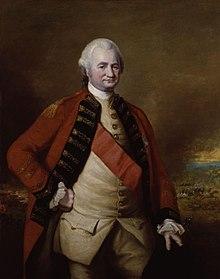
Robert Clive (1725-1774)
Robert Clive, ‘Clive of India’, played a crucial military and administrative role in the establishment of the British Empire in India in the mid-18th century. Like many of those who won fame and fortune in India, Clive pursued a political career, serving two terms in the House of Commons.
He came from a political family, many of whom represented West of England seats, including his father, Richard, and two sons, Edward and Robert. The political situation in the 1750s was fluid, with the dominant Whigs split into factions, and matters worsened when the long-time PM, Henry Pelham died in early 1754 just before a general election, to be succeeded by his brother, the Duke of Newcastle.
Clive was put forward by one Whig faction as a last-minute candidate for the Cornish rotten borough of Mitchell, a seat held between 1741 and 1745 by his cousin Edward Clive. At the 22 April 1754 poll, Clive and his colleague, John Stephenson, each with 30 votes, beat the opposing faction’s candidates by 5 votes. The losers promptly petitioned the House.
The Mitchell election petition became a focal point of the Whig factional fights, especially between the PM, Newcastle, and his rival, Henry Fox. In its report on 12 March 1755, Clive and Stephenson won the support of the investigating committee by 158 votes to 141, but the House voted in favour of the challengers, 207-183, with the Tories supporting Newcastle.
Clive returned to India, in part to recoup the financial costs of the previous year’s politicking. When he next stood for Parliament in 1761, it was as the victor over the French-backed forces at the Battle of Plassey in 1757. When one of Shrewsbury’s sitting Members, Robert More, decided not to stand again, Clive was put forward as a candidate by his father (an MP since 1759) and the local Whig leaders, and was returned unopposed.
Clive led a small faction based on family and friends, including his cousin, George, who was returned at a by-election in 1763 for the Shropshire rotten borough of Bishop’s Castle, which Clive had effectively ‘bought’.
He used his vast fortune – acquired during three separate periods in India between 1744 and 1767 – in the 1768 general election to try to increase his faction. However, lavish expenditure on property in several constituencies around the country bought him little success, apart from his brother, William’s, victory for the second Bishop’s Castle seat.
Despite expectations that Clive would be returned for Shrewsbury unopposed again in 1768, the Bath family, who had tried to challenge Clive in 1761, made a renewed effort at capturing the seat, through William Pulteney, Lord Bath’s heir. Pulteney tried to split the Clive ticket by wooing the other candidate, Noel Hill, to his side, but to no avail. Hill topped the 19 March poll with 233, but Clive comfortably gained the second seat with 149 votes to Pulteney’s 97.
At the 1774 general election, Clive and his new colleague, Charles Leighton, again managed to beat off Pulteney’s challenge, with Clive topping the 14 October poll with 210 votes to 178 for Leighton and 171 for Pulteney (though Pulteney later managed to overturn Leighton’s election by petition on technical grounds).
Clive had no strong partisan feelings at Westminster, seeing himself as a statesman above the party fray. His main concerns were the preservation of his Indian-based wealth and reputation, both within the East India Company, which was then the means of British rule in the sub-continent, and in Parliament, where many MPs had Indian interests.
These two arenas increasingly overlapped, as the state became more directly involved in India, thereby pushing Clive’s controversial role in commercial and colonial affairs politically centre stage. Matters came to a head in the early 1770s when critical parliamentary scrutiny of the ailing Company intensified, and ministers legislated to reform it.
This scrutiny also focussed on Clive’s personal dealings in India, and his accumulation of wealth while nominally a servant of the Company. Clive was forced to defend himself more than once in the Chamber in May 1773, ending one long speech with the dramatic plea, “leave me my honour; take away my fortune”, which dramatically turned the House in his favour.
Inexplicably, Clive died by his own hand in late 1774, just after his final general election victory. As one biographer accurately noted, “From start to finish Westminster politics … formed the framework of Clive’s life.”